Page 3 of 6
Posted: Wed Mar 26, 2008 6:59 pm
by Rokcet Scientist
Beagle wrote:In the old Sarasvati river system many settlements and cities are being discovered, and is culminated with the hypothesized sunken city of Dwarka in the Gulf of Cambay. All of these cities are at least older than 2,000 BC. Some are walled and others are not. This is a rather extensive civilization, probably easier older than the Sumerian. Megarh is dated to 6,000 BC.
But then, Bob Ballard hasn't yet scoured the Persian Gulf, has he?
Beagle wrote:But then, for our discussion, what constitutes a civilization?

I'd say a settlement or number of connected settlements with a couple thousand souls and some sort of (governmental) system of rules, and a distinct culture.
Posted: Wed Mar 26, 2008 6:59 pm
by kbs2244
Which keeps bringing me back to this.(which I have not seen or heard a follow up on)
http://www.telegraph.co.uk/news/main.jh ... wkuw01.xml
Posted: Wed Mar 26, 2008 7:06 pm
by Rokcet Scientist
Indeed, kb. And it all falls into place if you consider that by then the sealevels had been rising, fast at times, for a couple thousand years. Flooding coastal settlements and forcing the people to learn to deal with open water. Whether they liked it or not. And since neccessity is the mother of invention seafaring was born...
...not very long after agriculture, BTW.
Posted: Wed Mar 26, 2008 7:11 pm
by kbs2244
By the way. I can agree that a politically separated, but with a common history, “culture” can be a “civilization” without any central authority.
That seems to be the case in Meso-America, Greece, and the various city states through out history that we consider linked.
Posted: Wed Mar 26, 2008 7:13 pm
by kbs2244
Ah, yes...
Farmer or sailor?
The eternal question.
Posted: Wed Mar 26, 2008 7:29 pm
by Forum Monk
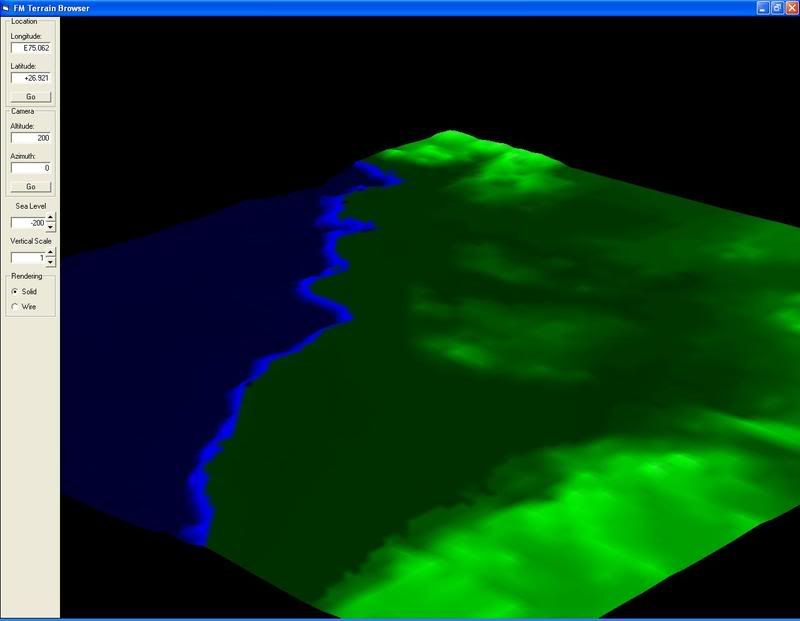
Farmer? Sailor? How 'bout farmer who became sailor?
Here is the southern Harappa plain at the the Last Glacial Maximum:
And here it is today:
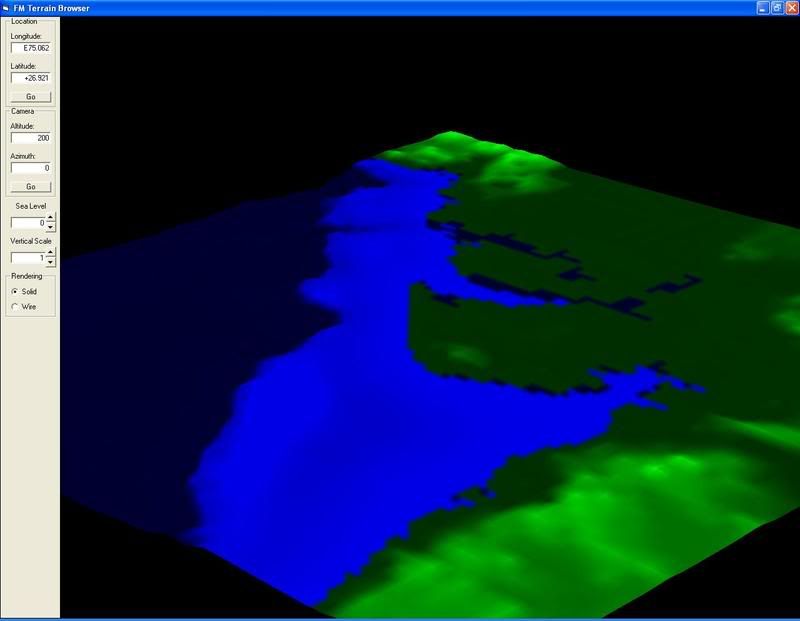
Both images looking northwest.
Posted: Wed Mar 26, 2008 7:36 pm
by Beagle
Fantastic FM.

Posted: Wed Mar 26, 2008 8:46 pm
by Rokcet Scientist
Some more illuminating images to put the era of ice ages and land masses
then into perspective:

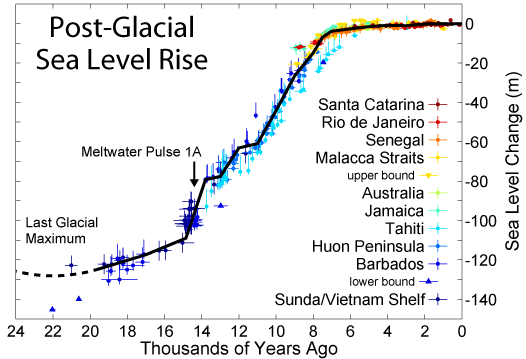
And since 90% of human activity is within 80 miles of the seashore – then as now – 90% of any remnants of their activities is now well and truely sunk. A job for Bob Ballard et al.
Posted: Wed Mar 26, 2008 10:10 pm
by Minimalist
Found this for you, kb. It refers to the Subiya find so it must be after 2001 but I can't find a date on it.
http://www.users.on.net/~mkfenn/page2.htm
Posted: Wed Mar 26, 2008 10:33 pm
by Beagle
Good find Min. Very interesting.
And btw, those sun-headed men in the rock art - they are found all over the world. Even later European art used the same artistic symbol to denote a "saintly" person. A universal concept maybe.
Posted: Thu Mar 27, 2008 3:15 am
by Digit
Yep RS. And the Andaman Islanders were the worlds best open water swimmers and the Abbos walked on water!
Posted: Thu Mar 27, 2008 5:56 am
by Rokcet Scientist
I think you need to have another good look at that map, Dig.
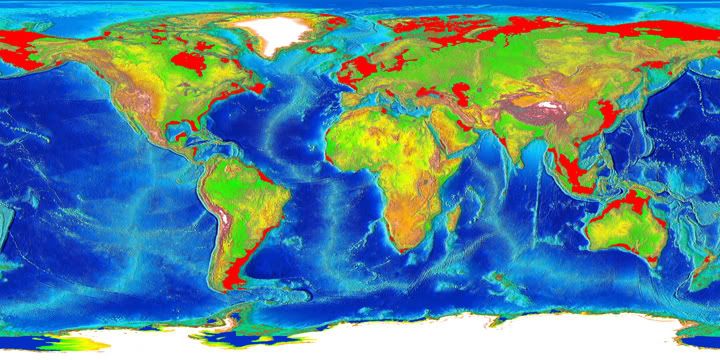
Red = the continental shelf.
Posted: Thu Mar 27, 2008 9:13 am
by Digit
Not being colour blind RS I can see water all round Australia and the Andaman Islands.
Posted: Thu Mar 27, 2008 9:27 am
by rich
RS - could earthquake events or softer land being washed off from rains or tsunamis or whatever have accounted for enough of a land mass to account for more continuous land connections?
Posted: Thu Mar 27, 2008 12:00 pm
by Digit
The the Sunda Straight and Gibralter are much too wide to have been bridged in that manner Rich. Currently Gib is 14 miles wide and Sunda is 16 at it its narrowist.
That would require one hell of a lot of slippage. Sunda has been deep sea for millenia, it is only now narrow, and narrowing, as Australia continues to grind its way north. One day Oz will be connected to the Malay peninsula.